
I think it’s time to start infodumping about baseball!
Let’s start off with the rules of the game, and I’m gonna try to do this from memory.
So the game itself comprises of two teams, one is the home team, the other is the visiting team. They each take turns being the offense side and the defense side. The defense consists of the pitcher, catcher, first baseman, second baseman, shortstop, third baseman, left fielder, center fielder, and right fielder. So, 9 players.
The offense consists of the same 9 players, minus the pitcher since they are replaced by another player, and they take turns hitting trying to hit a baseball using a bat
Real quick since this is important: the playing field.
dropping this rq -Hazard
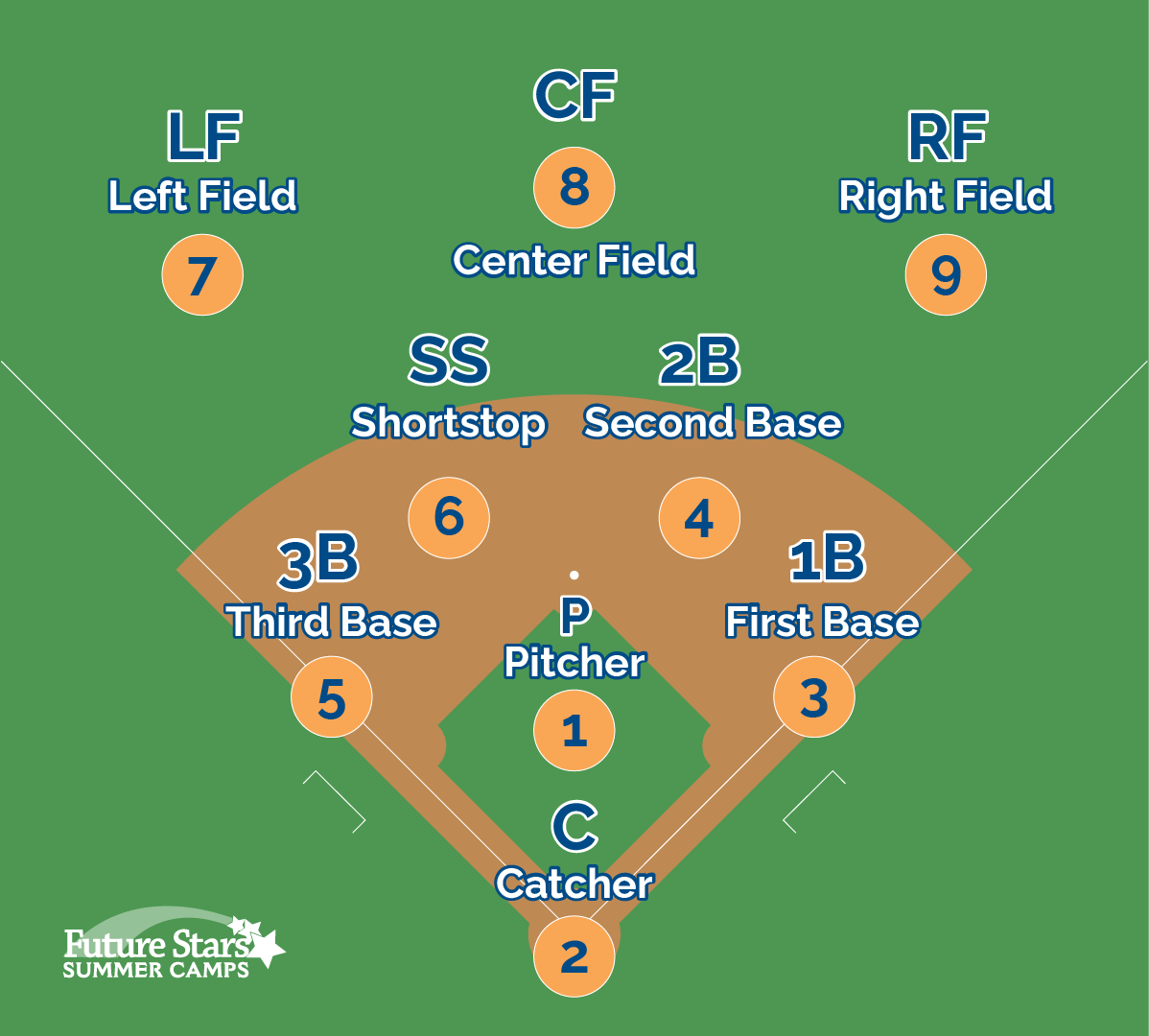
We played Left Field! -Hazard
Thank you Hazard!
So, the brown dirt area is known as the infield. That area includes the 4 bases (first, second, third, and home), and the pitcher's mound where the pitcher is placed. The outer green area is the outfield where the fielders are placed. That white chalk that makes an L are the fair/foul lines.
Alright, now I think I can start with the gameplay.
The game also includes umpires, which act as referees.
So, a full major league game has a minimum of 9 innings, the amount of time it takes to complete these innings is not set by a clock of any sorts (unless you count the pitch clock). That’s one of the beauties of this game, you don’t know when it’s gonna end. Each inning is split into a top and a bottom. These halves dictate which team is fielding and which team is hitting. If it’s the top of the inning, the visiting team hits while the home team fields. If it’s the bottom of an inning, it’s the inverse (home hits, visiting fields).
So, it’s the start of the game, there is usually a ceremonial first pitch that doesn’t affect the outcome of the game. Then the words “Play Ball!” are shouted, and the game begins.
So, the batter stands to the left or right of home plate, (that’s where the catcher is on the photo), and they use a bat to try and hit the baseball. The pitcher’s job is to make sure the batter doesn’t hit the ball and get them “out”.
They can achieve this in different ways:
Either by throwing strikes, which are balls that are either swung at and missed, or balls that are thrown into the strike zone and are caught by the catcher.
If a pitcher gets 3 strikes, that counts as an out.
If a ball is thrown outside of a strike zone, that is known as a ball. If a pitcher throws 4 balls, the hitter automatically walks to first base. If the batter is hit by a pitch, that’s an automatic walk.
If the batter does hit the ball, they can still be out if one of the following happens:
The batter hits the ball to one of the fielders and they catch it on the fly. Or if the ball does land on the ground, a fielder can pick up the ball, throw to the baseman that is closest to running hitter and have them either catch the ball and tag the runner. Or catch the ball while making contact with the base before the runner gets to the base.
If the fielding team gets 3 outs, then both teams change sides and swap whoever is fielding and hitting. This acts as going from the top of the inning to the bottom of the inning. After getting 3 outs in the bottom of the inning, they move forward to the next inning and repeat the process.
shout out to us getting a fractured ankle from getting hit by a pitch once -Hazard
Ouch.
Also watching you infodump about something we played is so fun I love this -Hazard
Now like I said, the hitters job is to, well, hit the ball! If the hitter does hit the ball, a number of things can happen:
The batter is out by the fielders doing one of the few things that I mentioned above. But they don’t want that! They want the ball to fall and touch the ground, in fair territory and in the outfield, in order to get a hit. They can also get a hit if they hit the ball and it stays in the infield, but they have to beat the fielders.
A hit can come in 4 varieties:
A single, which the batter hits the ball, and is able to get to first base without getting out.
A double, which is the same thing, but the batter is able to get to second base without getting out.
A triple, which is the same but getting to third base.
And the most exciting hit of all, and one that all batters which to achieve… THE HOME RUN! If the batter hits the ball, and hits it far enough that it goes out of field of play, but doesn’t go foul, then they are permitted to go to first, then second, then third, and then home plate without the risk of getting out. That will earn their team one run plus one run for any additional runner that are still present on the bases by the time the home run was hit, for a maximum of four runs. If a hitter does hit a home run with runners on all of the bases (bases loaded), that is considered a grand slam.
Speaking of runners…
After the batter reaches first base after hitting the ball, they are now known as the runner. Their job is to go to first base, then second base, third base, and then home plate in that order in order for them to score a run. If another batter does hit the ball into play, they are able to advance bases while still having the risk of getting out. They can, however, attempt to steal a base. That is when the runner is able to advance to a base without the batter hitting the ball. That is risky however, since the pitcher or catcher can notice this, and attempt to get them out while they are in the process of stealing. The runners also have to be as close as they can to the base as possible, since if they are off the base and are tagged, that is an out.
Also, runners have to make sure to not pass each other, since that is also considered an out (that’s one of the more complex rules).
Oh wait, I almost forgot to mention foul hits. If a batter hits a ball and it lands in the outside of fair territory (outside of the L that I mentioned ago), that is a foul ball. A strike is added to the hitter if they have less than 2 strikes. If they do have two strikes and hit a foul ball, then it basically counts as a do over.
Real quick: Errors
If a fielder does something like drop a ball or throw a ball too far, that’s an error. In some instances, an error means that the runners can advance forward one base.
Also, real quick unrelated not about runners: If a batter-runner is right behind them, then they have to move forward making room for them. This affects the any runners in front of them since they have to move forward as well.
NOW, I can talk about the 9th inning!
After the top of this inning, if the home team has more runs going into the bottom half of the inning, then that bottom half is not played as the home team has already won and doesn’t need any more runs. BUT, if the away team has more runs, or if both teams are tied, then the bottom of the 9th is played so that the home team has a chance to score more runs.If, during this bottom half of the 9th inning, the home team scores enough points to win, then they automatically win and the game ends. This is called a walk-off, and it’s very exciting.
HOWEVER
If the home team doesn’t score enough runs to tie, then the away team wins.
If both teams are tied and the bottom of the 9th is completed, then the game goes into extra innings, basically the game’s overtime. During these innings, the game is still played, but the same rules from the bottom of the 9th apply to the bottom of these innings. So technically, if neither team scores any runs, the game could basically go on forever.
During Major League Baseball games, however, a “ghost runner” is placed on second base at the start of each half of extra innings. This is so that the game is able to be ended quicker.
Now for some extra stuff:
If the fielders can get two outs on one play, that is known as a double play. Three outs, it’s a triple play.
There’s also this thing called the sacrifice. If a hitter hits a ball and a fielder catches it on the fly, that’s an out. However, if there are less than 2 outs and if a runner has their foot on the base they are occupying by the time the ball is caught, they can try and advance to the next base. They still have the risk of getting out, so they only really do this if the ball is caught way in the outfield.
Also, if the hitter hits the ball, and is able to run fast enough so that they touch all 4 bases without getting out, even though the ball is still inside the field of play, that is known as an inside-the-park home run.
And if the ball hits the ground in fair territory and bounces out of the field, that is a ground rule double and the hitter and all runners are awarded 2 bases.
If the ball does not hit the field but still bounces out of play in fair territory, that’s a home run.
That’s how we got this moment:
And I THINK that is all in terms of the basic rules!
Basic… /silly -JD/Bedrock/Citric Acid
Yeah, there definitely is a lot!
Oh yeah, the 9 batters have to bat in a preset order, and they repeat it throughout the whole gamem If they bat out of order, that’s an out.
And runners HAVE to touch bases while running, since they can be out on an appeal play by the fielding team. This appeal play can also happen if the runner leaves a base early during a sacrifice fly out.
NOW I think that’s all of them. The non advanced ones at least.